Preschooler's VOICE

RESPONSIBILITIES (Family) 

Brainstorming 

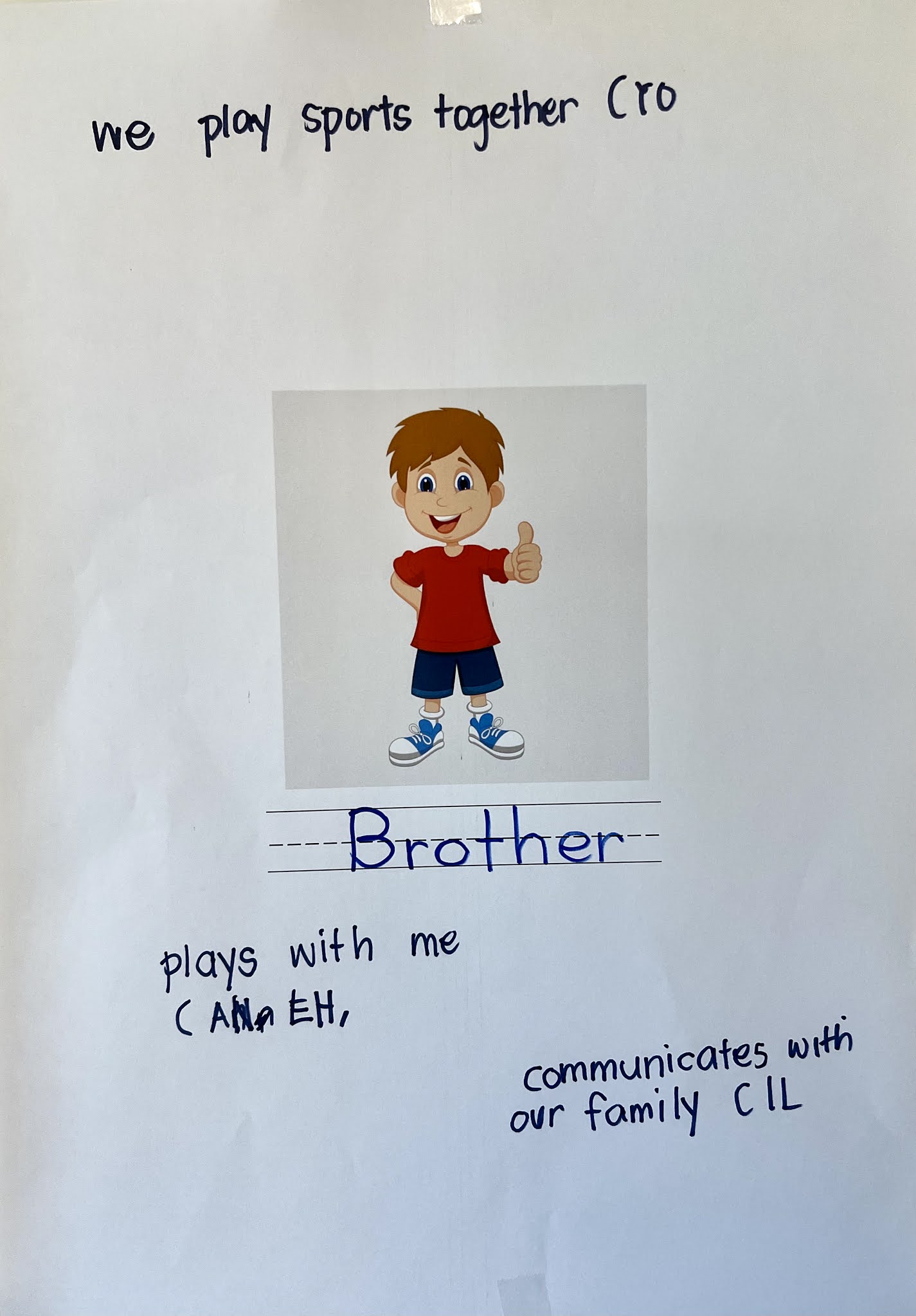
This week, the preschoolers talked in detail about the members of the families. After the family picture 'Tuning In' activity, the preschoolers reflected on the other responsibilities of each member: mother, father, brother, sister and 'me'. 


They realized that everyone in their home has their share of responsibilities. They also noticed that even if they belong to different families, every members' responsibilities are mostly the same. 

Understanding ROLES in the family through STICK PUPPETS

They showed creativity, collaboration and critical thinking by using stick puppets. They expressed their 'voice' and put them in the ROLE of the creator. They used the puppet sticks to make a simple short story (scenario) to show everyones' role and responsibilities when planning for a family activity. 


Next week, Preschoolers will move on and look into the School's Community. 


Comments

Popular posts from this blog

How The World Works

PRESCHOOL ASSEMBLY What a beautiful way to end our unit on celebration, to start a new unit on growth, and to connect it to our unit on imagination. As we begin our new unit on how the world works, the preschool students went around the school premises to list down living things that they saw around them.  As their curiosity kicked in they got so excited and started thinking exactly what living things are.  At first, some characteristics they mentioned about living things were: move  eat drink grow drive cars talk take a bath more But what really is the difference between living and non-living things?  Back in the classroom, we revisited their list and narrowed down the characteristics of living things into these important traits: they eat and drink (food and water) they grow or change they reproduce (make new living things) They agreed that even if something is moving (like robots or cars) it doesn't mean that they are living things. Trees do not move but they eat, ...

Our Country

Know your country. Appreciate your culture.  It is important to know your country's culture to also understand who you are.  As young researchers, the preschoolers looked for information and facts about their country.  They looked at the flag and what it signifies, the population, the capital, food, and popular places. This activity helps them develop cultural awareness which is important as they begin to understand that they came from different backgrounds. Learning about their differences creates a sense of appreciation and respect with people different from them.  "We are better at football!" "Our food is better!" But, it is not a competition of which country is better in football, bigger in size, or which hair color looks better.  It is knowing that they are all here together to celebrate everyone's similarities and differences.    As they become knowledgeable about the bigger picture of their own culture, they also learn to relate better to one an...

Entering the world of imagination

Children use imagination to write poems and create artworks in wonderfully instinctive and unfiltered ways.  They are not constrained by thinking or grammar rules and truly believe simple things in life.  This kind of imaginative freedom allows them to create words and images that we might not even consider. They use personal experience and reimagine things. They write freely without filter and   mix real life with fantasy to create rich, expressive writing. They can use this form of writing to develop self-confidence and connections with themselves and others.  In Artwork, they use their creative imagination to create symbolic representation that we, as adults, could never have imagined.  Children represent the world how they feel it, not just how they see it.  Their artworks become a portal to an entirely new worlds. In this unit on  how we express ourselves,  preschoolers will be encouraged to use: Open-ended materials (like...